Smash Hit
- 4.5
- Rating
- 100.00M
- Installs
- Free
- Price

 Analysis by App-foxy
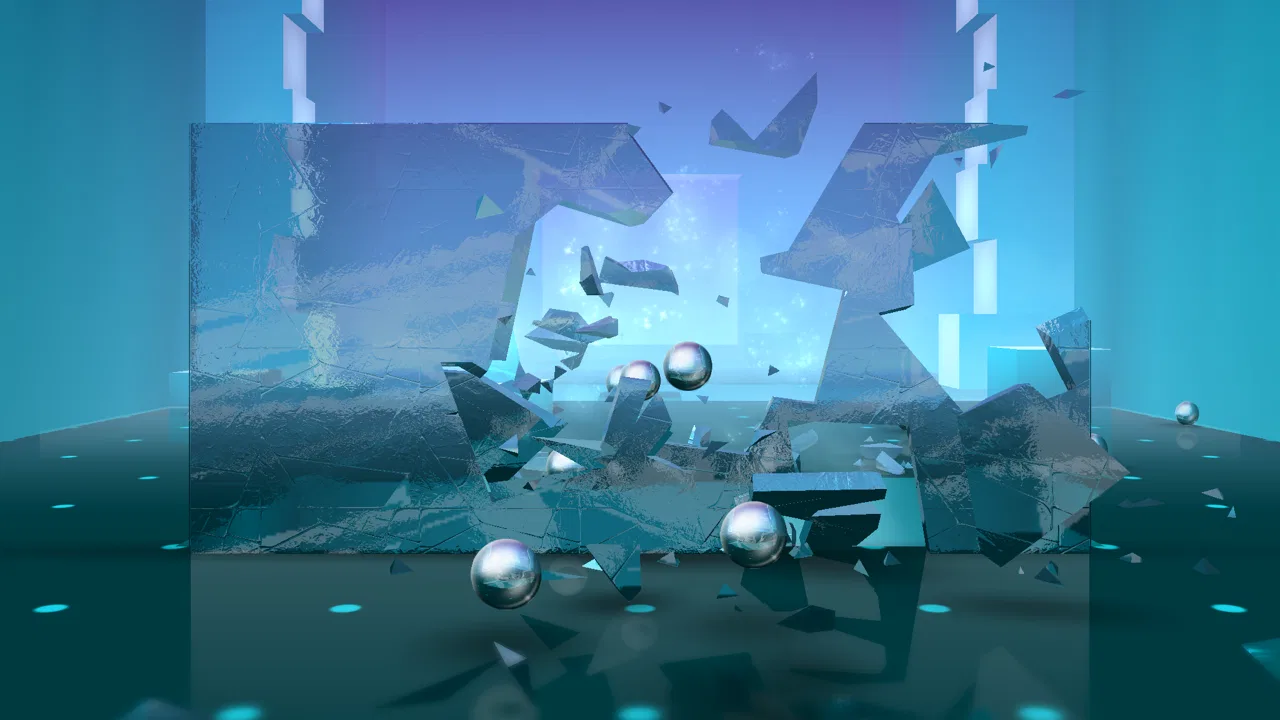
I first understood the appeal of Smash Hit within a few seconds: I tapped the screen, sent a metal ball into a glass obstacle, and watched the path explode into fragments. That simple action immediately gives the game its identity. It is an arcade experience built around timing, accuracy, and movement through a strange, calm-looking world that keeps asking for one more attempt.
What makes it more interesting than a basic obstacle game is the contrast between its atmosphere and its input. The presentation feels quiet and almost dreamlike, while the player is constantly deciding whether to throw now, wait, or save a ball for a more important target. I found that tension surprisingly effective. It is free to start, rated for Everyone, and available from Mediocre, but its real strength is how quickly it turns a single tap into a complete action-feedback-reward cycle.
How the first throw teaches you to play
The opening interaction is deliberately easy to understand. You look ahead along a moving route and tap where you want the ball to travel. Glass panels, geometric structures, and other obstacles approach as the scene moves forward. Your job is not to steer a character through a maze in the usual way; instead, you clear the route by breaking what stands in front of you.
You May Also Like

 Pandora - Music & Podcasts
Pandora’s Music Is Easy to Start, but Harder to Recover
Pandora’s strength is its low-effort path from a seed to a station. Its weak spot is how much confidence it asks you to place in connection, setup, and quiet recovery.

 AccuWeather: Weather Radar
AccuWeather Review: A Quick, Clear Forecast for Everyday Decisions
For everyday plans, the best forecast is the one you can understand quickly. AccuWeather makes rain timing, radar, and local conditions easy to act on, with a few trade-offs.

 Hill Climb Racing
Why Hill Climb Racing Still Turns Crashes Into One More Run
A tiny car, a bumpy hill and one more upgrade: Hill Climb Racing keeps resurfacing because its simple chaos makes every near-miss feel personal.

 AliExpress - Shopping App
AliExpress Makes Global Shopping Feel Personal, but Shoppers Bear the Risk
AliExpress turns a global marketplace into a pocket-sized discovery engine. Its reach is useful, its shopping loop compelling, and its trade-offs easy to miss.

 Lords Mobile: Kingdom Wars
Lords Mobile Is a Kingdom-Building Routine, Not a Quick Match
A case-by-case verdict on the building, battles, device demands, and social commitments that make Lords Mobile rewarding for some players and exhausting for others.

 PDF Scanner app - TapScanner
TapScanner Makes Paperwork Easier to Capture, Check, and Share
TapScanner makes scanning with a phone feel less like a rescue operation and more like a dependable step in getting work done. Its capture tools are useful, though not flawless.
More From Our News Desk
View All News


That difference matters. In many arcade games, the first challenge is learning several controls at once. Here, the control is almost self-explanatory, so my attention went straight to timing. A target can be close enough to hit but positioned awkwardly, partly hidden by another object, or surrounded by several possible choices. The game starts with a familiar tap, then gradually makes that tap more meaningful.
I also like that the action has a physical quality without pretending to be complicated. The ball leaves the center of the screen, the glass reacts immediately, and the visual result tells me whether my aim was sensible. There is no need to study a manual before playing. If you hand the phone to someone who has never seen it, they can usually understand the basic idea after watching one round.
The first useful habit is to stop tapping at the nearest thing automatically. I had better results when I looked slightly farther ahead and considered which obstacle could interfere with the next few seconds of movement. That small change turns the game from random tapping into a short-range planning exercise. It is still accessible, but it rewards players who learn to read the route instead of reacting only at the last moment.
Why the glass feedback feels so satisfying
The most memorable part of each successful action is the feedback. A clean hit does not merely remove an object; it produces a sharp burst of broken glass that confirms the timing instantly. When several targets are handled in sequence, the screen creates a rhythm of impact, movement, and anticipation. I never needed a large score display to know when I was playing well because the game made accuracy feel visible.
That feedback also helps with mistakes. A missed object or badly timed throw is easy to recognize, so I can adjust on the next attempt. The game does not bury the result under menus or complicated effects. The visual language remains consistent: successful destruction feels crisp, while a poor decision creates immediate pressure.
There is a subtle difference between hitting a large object and carefully breaking a smaller or less convenient target. The former gives relief because it clears space. The latter gives satisfaction because it proves that I was watching closely. This is one reason the core loop remains engaging after the novelty of smashing glass fades. The reward is not only progress; it is the feeling that my attention produced a better result.
Sound and motion reinforce that rhythm, although the experience never becomes as loud or aggressive as the action might suggest. The calm visual style gives the impacts more contrast. I can play for a short period without feeling as though the game is demanding constant emotional intensity, yet the next obstacle still arrives quickly enough to keep my focus active.
Accuracy is more valuable than frantic speed
My biggest early mistake was treating every moment as an emergency. Fast tapping feels natural, especially when several objects appear together, but it can waste the resources needed later. The better approach is to use the center of the screen as a reference, identify the most useful target, and throw with purpose. That sounds obvious, but the moving perspective makes patience harder than it appears.
I found it helpful to divide the route mentally into immediate and upcoming problems. The immediate target deserves attention because missing it can create a collision or force a rushed response. The upcoming target matters because a throw used carelessly now may leave me with fewer options afterward. This balance creates the game’s main skill curve: the controls remain simple, while the consequences of each tap become more demanding.
Players who enjoy aiming games will probably appreciate this structure. People who prefer button-heavy arcade titles may find it too restrained. There are no elaborate character abilities to distract from the central task. If your ideal mobile game involves collecting a large set of upgrades, customizing a character, or unlocking a deep equipment system, this is not trying to serve that preference.
The reward that starts another session
The game’s reward structure works because success improves both the immediate view and the chance of continuing. Breaking obstacles can open the route, protect the run, and create a more comfortable rhythm. A good sequence feels as though I have earned breathing room, even though the world keeps moving and the next decision is already forming.
That feeling is stronger than a simple points chase. I am not only trying to make a number larger; I am trying to preserve control over the run. A precise action pays me back with a clearer path, and that clearer path gives me the confidence to attempt the next difficult section. The reward therefore feeds directly into the next action rather than sitting apart from it.
There is also a useful risk-and-reward decision in choosing when to spend a ball. A target may be easy to hit, but the safest-looking throw is not always the best one if a more important obstacle is approaching. I began to treat ammunition as a planning resource rather than an unlimited permission to tap. That is one of the less obvious lessons of the game, and it gives the arcade format more depth than its one-touch controls suggest.
For a short everyday session, this works especially well. If I have a few minutes while waiting for a train or before an appointment, I can begin immediately, focus on one run, and stop without needing to remember a complicated story. The game is also suitable for passing a phone around among friends because the objective is visible and the controls are easy to explain. It does not require a long tutorial or a large time commitment before the first meaningful challenge.
What the free version means in practice
The game itself is free, with optional in-app purchases ranging from $1.99 to $9.99 per item. That makes it easy to try before deciding whether the loop suits you. I would recommend treating the purchase options as a convenience question rather than assuming they are necessary for enjoying the basic action. The important test is whether you like repeating runs, improving timing, and learning the route’s pressure.
Because the main experience depends on concentration, interruptions can be more frustrating than the price model. A notification, a slippery grip, or a poor moment to start can break a promising attempt. I get the best results when I play with both hands available and enough attention to react to what is approaching. This is not the ideal choice for someone looking for a game they can play while constantly switching between other tasks.
The Everyone age rating makes sense for the presentation. The destruction is stylized glass-breaking rather than realistic violence, and the atmosphere is more abstract than threatening. I would still avoid calling it completely passive entertainment: later sections demand focus, and a player who wants to improve will naturally become invested in protecting a run.
Why the reset is part of the appeal
Every failed run creates a small question: was the problem my timing, my target choice, or my decision to rush? That question is what makes the reset effective. I do not usually leave a failed attempt feeling that the game was incomprehensible. I can identify a moment where I lost control, which makes restarting feel like a chance to test a correction.
The reset is also quick enough to preserve momentum. There is little emotional distance between failure and the next attempt, so the lesson remains fresh. I can remember the obstacle that caused trouble and pay attention to it next time. This is a better design for repeated practice than a long post-game sequence that makes me wait before trying again.
At the same time, repetition can expose the game’s limits. If you need a constantly changing narrative, a broad multiplayer community, or a large collection of unrelated activities, the focused loop may eventually feel narrow. The game is not pretending to be a role-playing adventure or a social platform. Its appeal depends on whether refining one central skill feels rewarding to you.
Another practical point is device compatibility. The current version is 1.5.14 and requires Android 8.0 or later. On a compatible phone, the experience is best when the display is responsive and the device is comfortable to hold, since small timing errors can feel more significant than they would in a slower puzzle game. For iOS or Android users deciding whether to install, the key question is less about storage of progress and more about whether their device and attention suit fast visual timing.
How it compares with familiar arcade alternatives
Compared with endless runners, this game places less emphasis on moving a character from side to side and more on selecting targets in a forward path. An endless runner may reward rapid lane changes and memorized patterns; here, I am judging distance, angle, and the value of each throw. That makes it a better fit for someone who likes visual precision but does not want a virtual joystick or several movement buttons.
It also differs from physics puzzle games. Those games often ask me to experiment with a level until I discover a solution. This one gives me less time to deliberate. I can think ahead, but the route keeps advancing, so the decision must eventually become a tap. The result is more immediate and reflexive than a traditional puzzle, while still offering enough planning to prevent it from becoming pure reaction.
Against score-focused tap games, its atmosphere gives it more identity. The setting, sound, and glass effects make each action feel connected to the world rather than merely adding points to a counter. However, someone who wants a huge variety of modes may prefer a broader arcade collection. This is strongest when its narrow focus is a virtue: one action, one moving route, one reason to improve.
I would skip it if you dislike restarting after mistakes, if you want relaxed progress with little pressure, or if your favorite mobile games are built around collecting and customization. I would also look elsewhere if you need a game that remains enjoyable with the sound off and minimal visual attention, because the timing and impact feedback are central to the experience.
My verdict on the complete loop
The loop is easy to describe: aim, throw, watch the glass break, gain a safer or more rewarding path, make a mistake, reset, and try to do better. What makes it work is the quality of the transition between those steps. The action is immediate, the feedback is unmistakable, the reward affects the next decision, and the reset arrives before frustration has time to become boredom.
After spending time with it, I see why the game has reached more than 100 million installs and earned a 4.5 average from around 4.7 million ratings. Those figures do not replace personal taste, but they fit my experience: the premise is unusually easy to grasp, while accurate play takes longer to master. It has also accumulated around 170 thousand written reviews, which reflects how strongly the compact arcade format has connected with a broad audience.
For me, the best use case is a focused break: headphones if I want the full impact, a stable grip, and enough time to finish one attempt without interruptions. I would not describe it as a game I play for a deep story or a large social system. I play it because the next throw is always understandable, the result arrives instantly, and a failed run usually leaves me with one clear idea to test.
Mediocre has kept the design centered on that feeling rather than surrounding it with unnecessary complexity. The free entry point makes trying it straightforward, and the Everyone rating makes the presentation broadly approachable. The optional purchases are worth considering only after deciding that the repeated timing challenge genuinely fits your habits.
My final recommendation is simple: install it if you want a polished arcade game where every tap has visible consequences and improvement comes from attention rather than complicated controls. Skip it if repetition, pressure, or a tightly focused objective sounds limiting. For the right player, the first smash is entertaining, but the reason another session begins is more interesting: the game makes failure feel like useful information, and that is enough to make one more attempt feel worthwhile.
FAQs for Smash Hit
01What is the primary objective of Smash Hit?
Smash Hit is an immersive physics-based game where the main objective is to travel as far as possible while breaking glass obstacles along your path. Players must strategically throw metallic balls to shatter these obstacles, requiring both precision and timing. The game's captivating visuals and rhythmic soundtrack enhance the experience, creating a meditative yet challenging environment.
02How does the scoring system work in Smash Hit?
In Smash Hit, your score is determined by the distance you travel and the number of obstacles you smash along the way. Each successful hit on a glass pane or obstacle earns you points. Additionally, maintaining a streak of successful hits without missing will reward you with bonus balls, essential for survival as the game progresses.
03Are there any in-app purchases in Smash Hit?
Yes, Smash Hit offers in-app purchases. While the base game is free to play, purchasing the Premium version unlocks additional features such as the ability to continue from checkpoints and access to more game modes. This can enhance the gameplay experience, particularly for those who enjoy extended sessions.
04What are the system requirements for Smash Hit on mobile devices?
Smash Hit is available for both Android and iOS devices. It requires Android 2.3 or later and iOS 6.0 or later. The game is lightweight and designed to run smoothly on most modern smartphones and tablets, though performance may vary on older devices. Ensure your device meets these requirements for optimal gameplay.
05Does Smash Hit require an internet connection to play?
No, Smash Hit does not require an internet connection to play. It is an offline game, making it perfect for enjoying during commutes or in areas with limited connectivity. However, an internet connection is needed for initial download and for any in-app purchases or updates.
Pros
- Immersive graphics and sound effects.
- Addictive gameplay with increasing difficulty.
- Simple controls for easy navigation.
- No ads in the premium version.
- Supports offline play.
Cons
- Requires in-app purchases for checkpoints.
- Can become repetitive over time.
- Higher levels can be very challenging.
- Limited variety in obstacles and environments.
- Not compatible with some older devices.

Smash Hit
Gallery